
Upkeep that keeps a garden new — scheduled horticulture by the same hands that built the scheme.
A garden is only as good as its maintenance. The finest planting scheme drifts within a season without informed, scheduled care — and recovers slowly, if at all, once it has been let go. We provide garden maintenance, lawn care and landscape maintenance services for hotels, resorts, estates and private homes across Udaipur and Rajasthan.
We maintain the landscapes we design, and others we inherit, on planned horticultural schedules that hold a garden at opening-day standard year after year. Contracts range from a lawn maintenance contract for a single estate to full landscaping maintenance in Udaipur for a working hotel — plant maintenance services, seasonal replanting and irrigation care under one garden AMC (annual maintenance contract), with garden AMC services available to properties across India.
Every part, in-house.
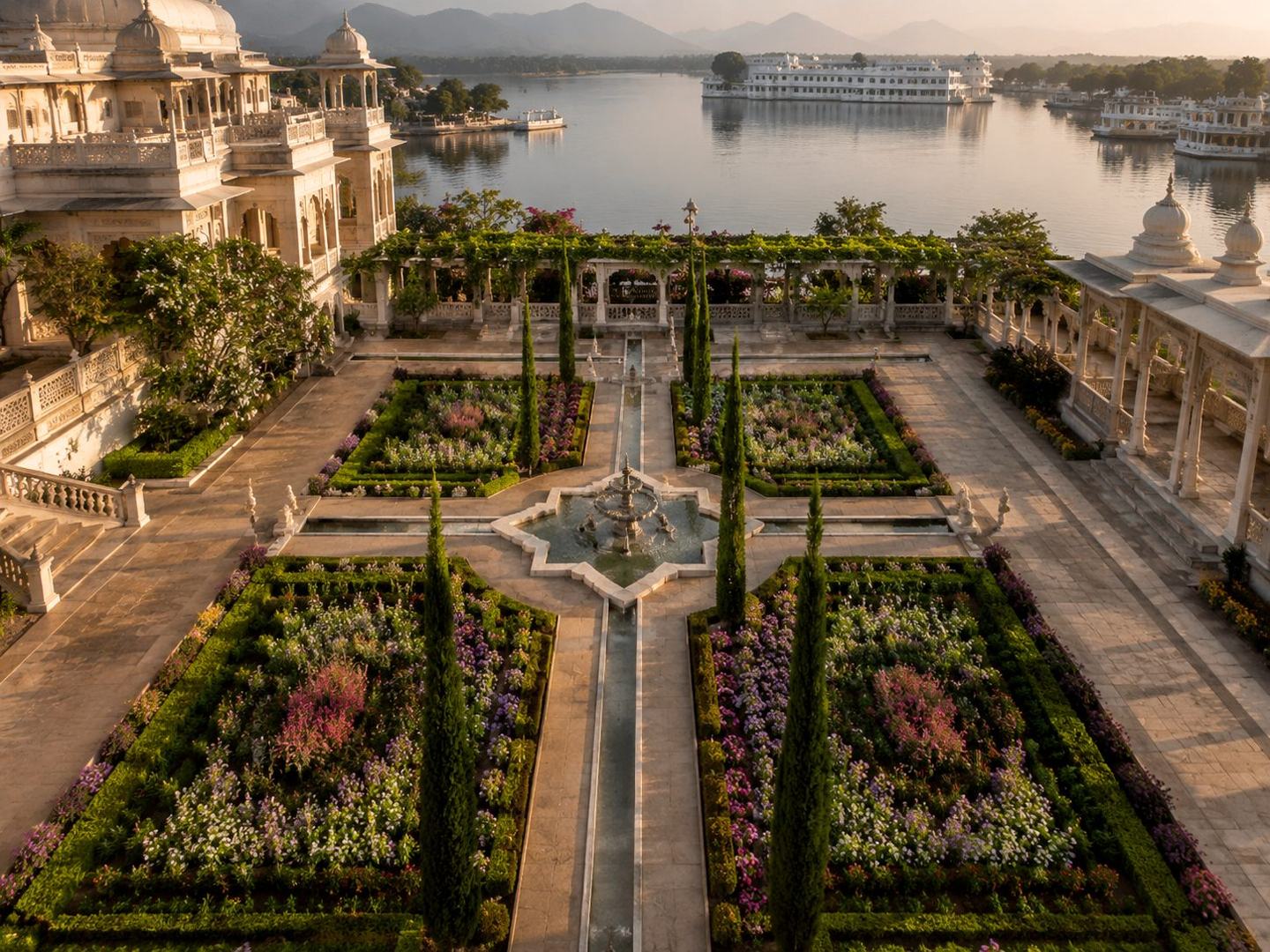
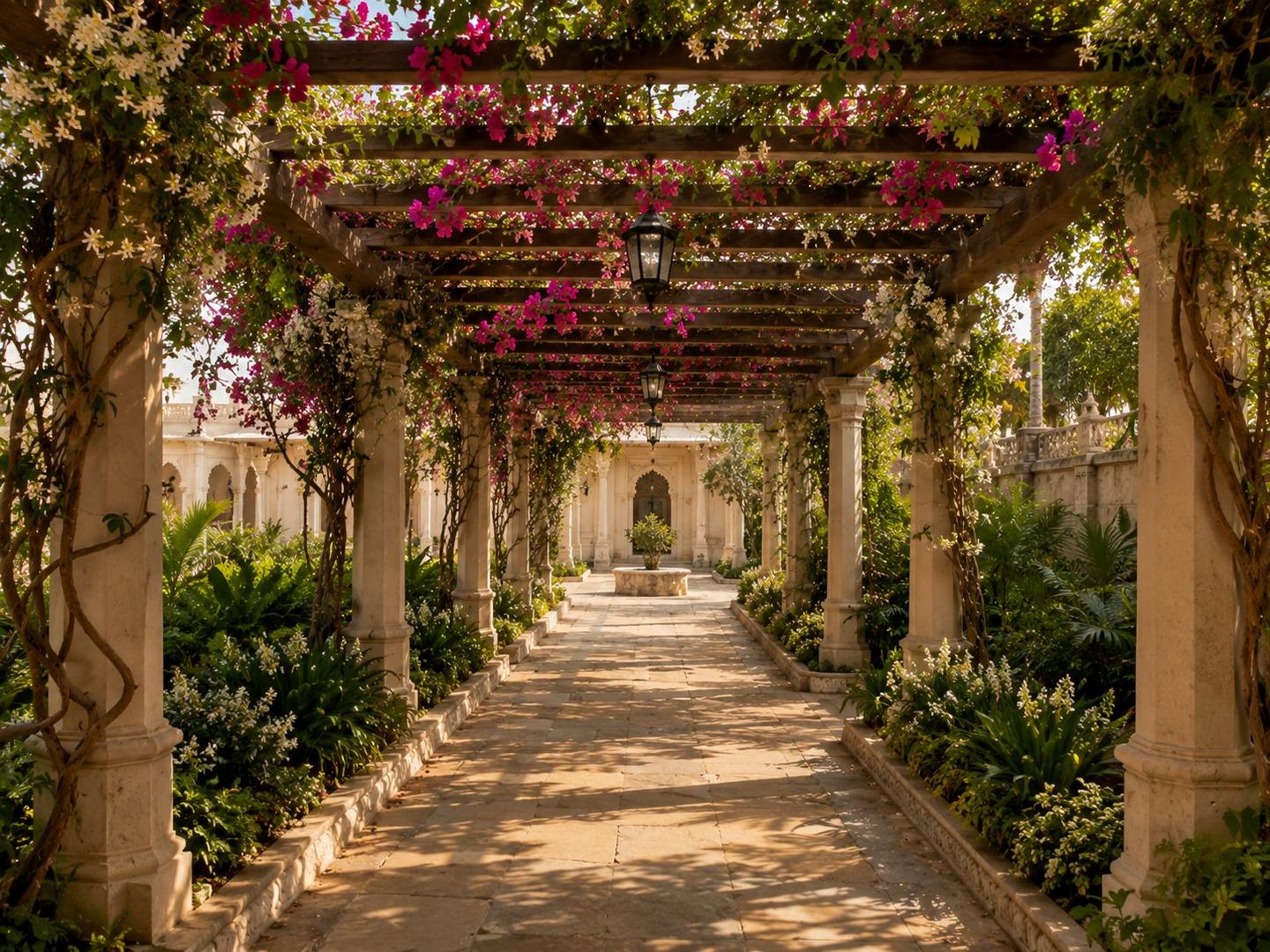
- 01Scheduled horticulture
Planned pruning, feeding and seasonal work — not reactive call-outs.
- 02Soil & plant health
Ongoing soil care and monitoring that keeps planting vigorous and resilient.
- 03Integrated pest watch
Early, low-chemical pest and disease management by trained horticulturists.
- 04Irrigation upkeep
Regular checks and adjustment so the watering system keeps performing.
- 05Seasonal replanting
Refreshing beds and replacing spent planting to keep the scheme full.
- 06One accountable team
The same team throughout, so standards and knowledge never reset.
How we work.
Good maintenance is a calendar, not a call-out. We work to a seasonal schedule of pruning, feeding, soil care and irrigation checks, so problems are prevented rather than chased.
Pest and disease are managed the way we build gardens — biologically first, with beneficial insects and healthy soil doing most of the work and chemistry reserved as a last resort.
Because the same team maintains the garden that understands it, knowledge compounds instead of resetting. The property keeps one accountable point of contact and a landscape that stays at its best.
What a garden maintenance AMC actually covers.
Garden maintenance services are sold in this market on frequency and headcount. We price ours on scope and standard instead, because a crew that visits often and prunes wrongly costs a garden more than one that visits less and knows what it is looking at. An annual maintenance contract is not a gardener on call. It is a written schedule of horticultural work, priced against a defined scope, with someone accountable for the standard. Ours sets out four things before anything is signed.
Visit frequency. Most hotel and resort landscapes need a permanent or near-permanent presence; a private estate is usually weekly or fortnightly, tightening through the growing season and after the monsoon. The frequency follows the planting, not a price band.
Scope, itemised. Which beds, which lawns, which trees. What is pruned and when. What is fed and with what. Who clears the drains. Anything outside the scope is quoted separately rather than quietly dropped.
Standards. Lawn height, edge definition, bed coverage, permitted weed threshold. Written down, so “maintained” means the same thing to us and to the client a year later.
Replacement policy. Which losses we carry and which are chargeable. Plants die; a contract that pretends otherwise gets argued about instead of honoured.
A Rajasthan maintenance calendar.
Garden maintenance in this climate is governed by two events: the summer and the monsoon. Everything else schedules around them.
February to March. Structural pruning before the heat. Soil opened and fed. Irrigation pressure-tested and every emitter checked while there is still time to fix what has failed — not in May, when a blocked line kills planting in days.
April to June. Survival. Watering moves to early morning and late evening, mulch is topped up to hold soil moisture, and shade is given to anything newly planted. Almost no pruning: cutting in peak heat invites dieback.
July to September. Monsoon. Growth accelerates and so does fungal pressure. Drains and roof outlets cleared before the first rain and again mid-season. Irrigation switched down or off — the commonest waste we inherit is a system left running through August.
October to January. The restoration window. Post-monsoon cutting back, replanting gaps, lawn maintenance and renovation, and the season's heaviest feeding. This is when a garden either recovers its shape for the year ahead or quietly loses it.
Lawn maintenance, where the water bill is decided.
On most estates we inherit, the lawn consumes more water than every bed, tree and container combined. It is also the element judged first, which is why it is rarely reduced and usually mismanaged instead.
Species before schedule. Selection governs everything that follows. Bermuda holds through a Rajasthan summer and recovers from wear, but goes off-colour in a cold January. Buffalo grass asks for less water and less cutting but will not take heavy foot traffic. Korean grass looks immaculate and is slow to repair. A lawn that hosts weddings and a lawn that is looked at from a veranda are not the same product, and should not carry the same species.
Cutting height is the single biggest lever. Scalped grass loses the shade over its own roots, the soil surface heats, and the water requirement climbs. We hold height up through summer and take it down only in the October restoration window. The difference between a 25 mm and a 40 mm summer cut shows up on the water bill, not just in the look.
Aeration and dethatching run once a year, post-monsoon, when the grass has the vigour to close the holes. Compacted soil sheds irrigation water sideways; on a lawn that has hosted events all season, much of the water applied never reaches a root.
Edges and levels. Most lawns fail visually at the boundary long before they fail agronomically. Edges cut to a defined line, low spots topped and levelled during the restoration window, and bare patches turfed rather than seeded when the date matters.
What a maintenance visit actually involves.
“Maintenance” is used to mean anything from a man with a mower to a managed horticultural programme. Ours is a fixed cycle with a written record, because a garden declines through small omissions repeated weekly, not through one dramatic failure.
Cadence. Weekly on planted estates and hospitality properties. Fortnightly is possible on mature, low-intervention schemes, but not through the monsoon — three weeks of unchecked growth in August takes two visits to undo.
Every visit. Irrigation walked zone by zone with the controller running — emitters checked, leaks found, pressure confirmed. Mowing and edging to the agreed height. Weeding to the agreed threshold. Deadheading and light corrective pruning. Litter and fallen material cleared. Drains and roof outlets checked in season.
Monthly. Feeding to programme, soil condition assessed, pest and disease scouted before treatment is needed rather than after, containers and specimen plants inspected individually.
Recorded. What was done, what was noticed, what needs a decision. A property manager should be able to read three months of sheets and see why a bed was replanted, not be told after the fact.
Where maintenance money is actually wasted.
When we take over a neglected estate, the same handful of faults account for most of the loss. None of them are exotic.
Irrigation left running through the monsoon. The most expensive habit in Rajasthan gardening. It wastes water, drowns roots and invites fungal disease in the one season when the garden needs almost nothing from a controller.
Summer scalping. Cutting a lawn short in May because it looks tidier, then paying for the recovery in water and replacement turf in July.
Pruning on the wrong date. Flowering shrubs cut after bud initiation lose a season of flower. Hard pruning in peak heat causes dieback on plants that would have been fine in February.
Unserviced filters. On borewell water, a neglected filter destroys drip emitters slowly and invisibly across an entire zone. Replacing emitters is cheap; replacing the planting that died while nobody noticed is not.
Bare soil. Mulch is treated as decoration and skipped when budgets tighten. It is the cheapest water-saving intervention available, and the first thing we reinstate.
A maintenance contract that costs more than an ad-hoc gardener usually still costs less across a year, because it stops the replanting.
Maintaining a landscape while guests are in it.
A hotel or resort garden has a constraint a private garden does not: it must look finished every single day, and the work of keeping it that way has to be nearly invisible.
That changes how the work is scheduled. Noisy machinery runs before guests are up and away from occupied wings. Heavy cutting back and replanting are timed to the property's low season rather than the plant's ideal week, and the planting scheme is chosen up front so that compromise costs little. Beds at arrival and dining terraces carry replacement planting held in reserve, so a gap is filled the same day rather than the next visit.
We also maintain landscapes we did not build. That starts with a condition survey — what is thriving, what is failing and why, what the irrigation is actually doing — and an honest first-year plan. Inherited gardens rarely need everything replaced; they usually need the soil fixed and the schedule kept.
Garden maintenance, answered.
What does a garden maintenance contract cost?
It is priced on area, planting complexity and visit frequency — a lawn-dominant estate and a densely planted resort garden of the same size are different jobs. We survey, agree a written scope and quote against it. We do not quote per square foot over the phone, because the number would be wrong in both directions.
Do you maintain gardens you did not design?
Yes, and a good share of our contracts are exactly that. We begin with a condition survey and a first-year plan rather than a clean sweep. Most inherited gardens need soil correction, irrigation repair and a kept schedule far more than they need replanting.
How often should a garden be maintained in Rajasthan?
Hotel and resort landscapes generally need daily or near-daily presence. Private estates usually run weekly, tightening to twice weekly through the growing season and after the monsoon. Monthly visits do not hold a garden in this climate — they only document its decline.
What happens if plants die under contract?
The contract says so in advance. Losses from establishment failure or care we are responsible for are ours to replace. Losses from an event outside it — a burst line we were not asked to maintain, construction damage, an exceptional season — are quoted. Agreeing this before it happens is the point.
Do you handle irrigation as part of maintenance?
Yes. Emitters, filters, pressure and controller schedules are checked on the visit cycle, seasonally adjusted, and shut down through the monsoon. An irrigation system nobody checks is the most expensive way to lose a garden.
Do you train the property’s own gardening team?
Yes, and on larger properties it is usually the better arrangement. We set the programme, train the in-house team on cutting heights, irrigation checks and the seasonal calendar, and visit monthly to audit and correct. The property keeps daily control; the horticultural decisions stay with us.
How long does it take to bring a neglected garden back?
One full season for appearance, two for health. The October to January window does most of the visible work — cutting back, replanting gaps, lawn renovation and feeding. Soil that has been compacted or starved for years takes a second cycle before planting stops needing life support.
Do you provide regular gardener visits for private homes?
Yes. Most private gardens in Udaipur run on a weekly gardener visit under a written maintenance contract — pruning, lawn care, plant maintenance, irrigation checks and the seasonal calendar — with the same crew each time. We are not a one-off clean-up service; the value is in the schedule being kept, week after week.
What does a garden maintenance contract include?
A written scope: visit frequency, the lawn and plant maintenance programme, irrigation servicing, seasonal feeding and pruning, monsoon shutdown and post-monsoon restoration, what counts as a replacement under contract, and the review points. Annual contracts (AMC) are the norm for hotels and estates; private homes usually run on a monthly or quarterly arrangement.
Estate Maintenance done properly pays for itself.
Deferred maintenance is the most expensive kind. Scheduled, knowledgeable upkeep protects the investment already made in a landscape, keeps a hotel or estate photographing at its best, and avoids the costly cycle of neglect and replacement.
Enquire for your propertyRelated services
Planning estate maintenance for a hotel, resort or estate?
Tell us about the site and the season you're working towards. We'll arrange a survey and return a drawn plan.
Tell us about the site.
Every scheme begins with a survey. Send us the essentials and we will arrange one, then return a drawn plan — not a quotation against an assumption.
OR REACH US DIRECTLY