
A terrace garden is a building project with planting at the end of it. Treated as a planting project with a building underneath, it leaks — and the repair costs several times what doing it in sequence would have.
This is the terrace garden setup sequence we use on every roof, from a private terrace in Udaipur to a hotel rooftop. There are six stages. The order is not a preference.
1 · Load — before anything else
Wet soil is heavy. Saturated growing medium, containers, water, paving and people together impose a real load on a slab that may have been designed for occasional foot traffic and nothing more.
The question to answer before a single pot is bought is what the roof can carry, and that is a structural question — a drawing, or an engineer’s assessment, not an opinion. Where the capacity is limited, the design adapts: lightweight medium, planting concentrated over beams and load-bearing walls rather than mid-span, and shallower profiles.
2 · Waterproofing — the stage nobody sees and everybody regrets
Existing roof waterproofing is generally specified to shed rain, not to sit under permanently damp soil. Those are different duties. So the membrane is assessed, and usually upgraded, before anything goes on top of it. A root barrier goes above the membrane, because roots will find any joint given a few years and the plants most likely to do it are the vigorous ones people like.
Upstands at parapets and around every penetration are detailed deliberately rather than improvised. Water finds the junctions. This is the stage that gets compressed when a budget tightens, and it is the one that cannot be: re-waterproofing a planted terrace means removing the garden first.
3 · Drainage — where the water actually goes
Everything that is poured on, and everything the monsoon delivers, has to leave. That means:
- a drainage layer above the root barrier;
- a filter fabric above that, so medium does not wash down and block it;
- falls directed to functioning outlets;
- outlets that can be cleaned by somebody who is not a specialist.
A blocked outlet on a planted roof in a monsoon downpour turns a garden into a tank, and a tank is a load case nobody designed for. Drainage failure is both the most preventable and the most expensive terrace fault there is.
4 · Irrigation — before the planting, not after
Drip irrigation goes in before planting. Putting it in afterwards means lifting what has just been planted, and the version that gets improvised on top of finished beds is always worse.
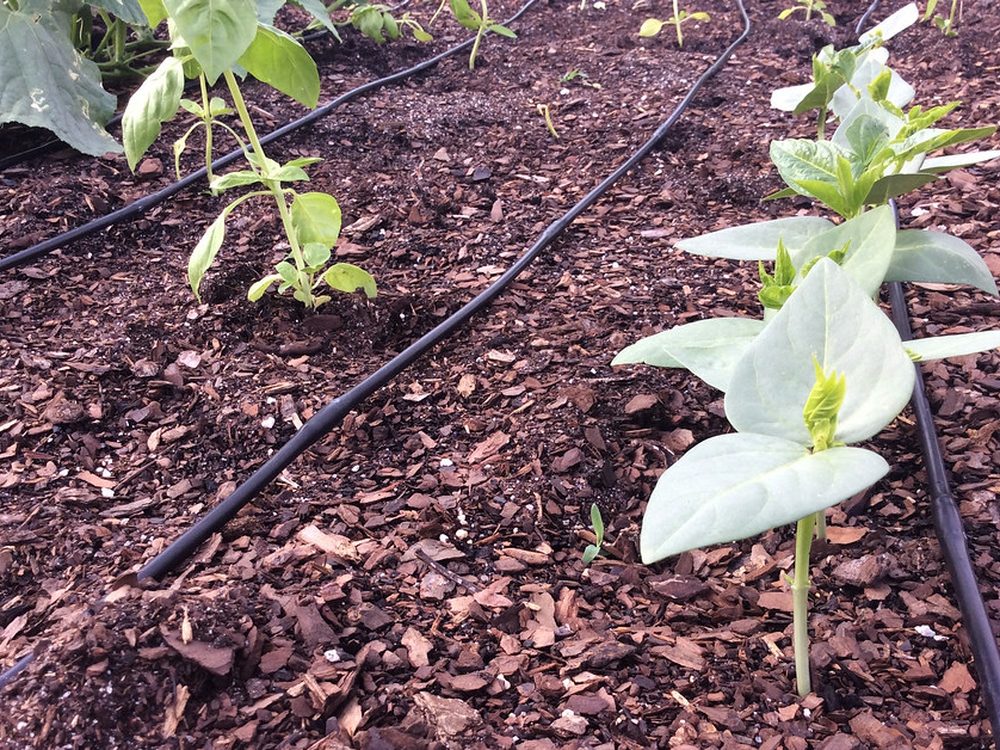
On a terrace this means inline drip through the beds, zones separated by how thirsty the planting is and how exposed it is, filtration matched to the water source — hard bore water scales drip emitters closed from the inside over a season or two — and flush points so lines can actually be cleared rather than theoretically cleared. A controller and a rain sensor turn an intention into something that still happens when nobody is watching. Detail on our drip irrigation system page.
5 · Medium — built, not bought
Garden soil is the wrong material for a roof. It is heavy, it compacts, and once compacted it holds water at the bottom of a container and suffocates roots. A terrace medium has to be light when saturated, open enough to drain and hold air, and water-retentive enough that it does not dry out completely between waterings.
| Component | What it does |
|---|---|
| Good compost | Structure and nutrition |
| Coco peat | Water holding without weight |
| Coarse material (grit, perlite, crushed brick) | Drainage and air at the roots |
Depth follows the planting. Groundcover and herbs want relatively little; shrubs want considerably more; anything that will become a small tree wants a dedicated deep zone placed where the structure can carry it.
6 · Planting — last
By the time planting happens, every decision that could have caused a leak has already been made correctly.
Plant to the season rather than to the programme. There are two good planting windows in this region, and forcing planting into May doubles the establishment water and materially raises losses. Where a handover date makes summer planting unavoidable, plan shade and extra water for it and price it honestly, rather than absorbing the failures quietly.
Species selection for terraces is its own subject — which plants actually survive a Rajasthan terrace covers it properly.
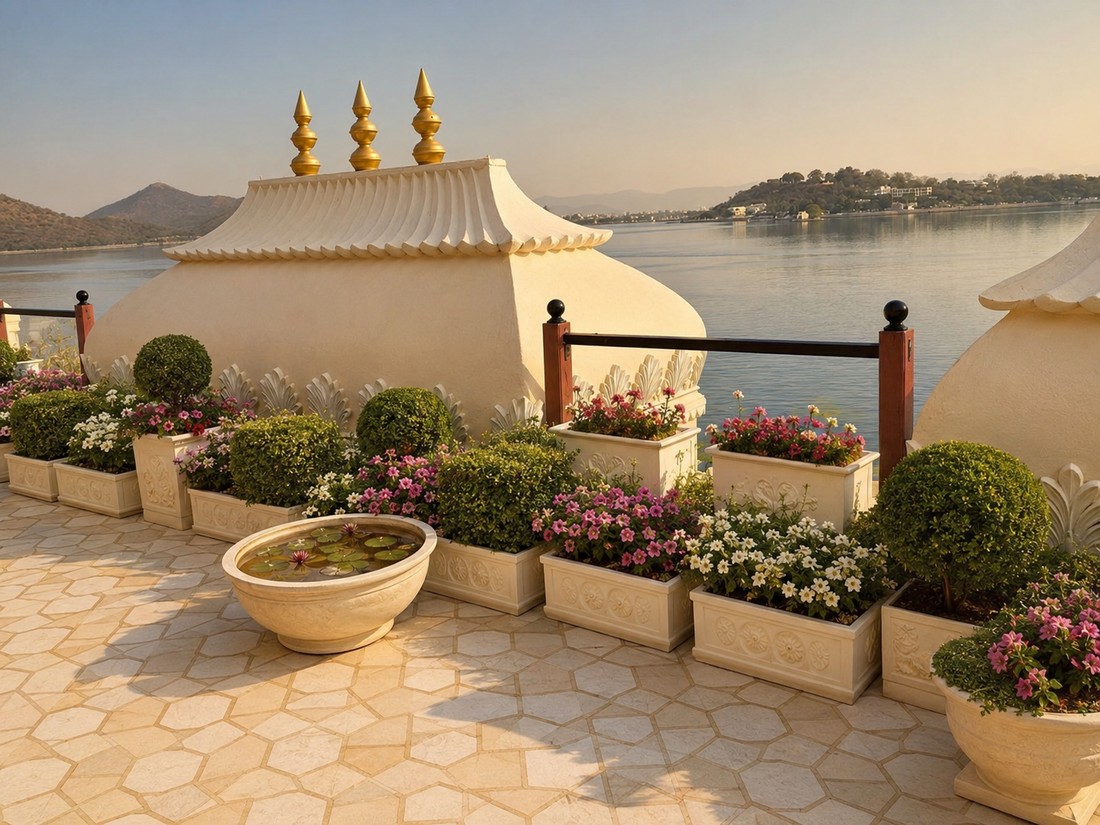
What it costs to get the order wrong
| Mistake | What happens |
|---|---|
| Planting before waterproofing | The garden comes off to fix the roof. |
| Planting before irrigation | Beds are lifted, or an inferior surface system is improvised. |
| Skipping the load assessment | At best, restrictions discovered late and a redesign; at worst, a structural problem. |
| Drainage as an afterthought | Waterlogging, root death, and a load nobody planned for. |
None of these are hypothetical. They are the four reasons we are called to look at somebody else’s terrace.
How long it takes
- Survey, structural assessment and drawings — a few weeks.
- Waterproofing and drainage — depends entirely on the state of the existing roof.
- Irrigation, medium and planting — quick, once the roof is ready.
- Establishment — eighteen months beyond planting. This is the stage that decides whether the garden is still good in year five.
The binding constraint is almost never the construction. It is the planting season, and the date the garden has to be presentable.
Setting up a terrace garden in Udaipur or anywhere in Rajasthan? We survey the slab first, put the sequence in writing, and build every stage with our own crew — see the terrace garden service.
Book a site visitAsked often.
What is the correct order to build a terrace garden?
Load assessment, waterproofing, drainage, irrigation, growing medium, then planting. The order is structural rather than a preference — planting before waterproofing means removing the garden to fix the roof later.
Does a terrace garden need special waterproofing?
Almost always. Existing roof waterproofing is specified to shed rain, not to sit under permanently damp soil. The membrane is assessed and usually upgraded first, with a root barrier above it, because roots find joints over time.
How much weight can my roof take for a garden?
That is a structural question requiring a drawing or an engineer's assessment, not an estimate. Saturated medium, containers, water, paving and people together impose a real load on a slab that may only have been designed for foot traffic.
Can irrigation be added after the terrace garden is planted?
It can, but it means lifting what was just planted, or improvising a surface system that performs worse. Irrigation belongs in before planting — it is cheaper and better in the correct sequence.
What soil should be used on a terrace?
Not garden soil — it is heavy and compacts. A terrace medium needs to be light when saturated, open enough to drain and hold air, and still water-retentive: typically good compost, coco peat and a coarse drainage component.
Tell us about the site.
Every scheme begins with a survey. Send us the essentials and we will arrange one, then return a drawn plan — not a quotation against an assumption.
OR REACH US DIRECTLY